Best places to plane spot at Heathrow (2026 guide)
The best place to plane spot at Heathrow is Myrtle Avenue in Hatton — the classic close-up spot for low arrivals when the airport is landing to the west on runway 27L. Hatton Cross is the best option without a car, the Southern Perimeter Road suits departure photography, Cranford comes alive during easterly operations, and King George VI Reservoir gives distant shots with a water foreground. One thing to know first: the Heathrow Academy's official viewing stand on Newall Road has been closed and fenced off for several years — despite still being listed on Heathrow's website — so the informal spots below are your real options. Heathrow lands to the west, over London, around 70% of the time thanks to the prevailing south-westerly wind, which is why Myrtle Avenue — directly under that approach — is so reliable. As the UK's busiest airport and the main base for British Airways and Virgin Atlantic, it's also one of the best places in Europe to see long-haul widebodies such as the Airbus A380 and Boeing 787.
Heathrow plane spotting locations at a glance
These are free, publicly accessible vantage points (the Heathrow Academy stand is the one official facility). Always park considerately, follow local signage and respect residential streets and private property — access can change, so check before you travel.
| Location | Ease of access | Parking | Facilities | Best for | Viewing angle |
|---|---|---|---|---|---|
| Myrtle Avenue, Hatton | Car easiest; ~15 min walk from Hatton Cross tube | Residential street only | None | Serious photographers, low arrivals | Head-on, right under the 27L approach |
| Heathrow Academy stand, Newall Road | Closed — fenced off for years | — | None (stand closed) | Reference only — still listed officially, but not accessible | Formerly overlooked the northern runway |
| Hatton Cross | Best by public transport (Piccadilly line) | Street parking nearby | Cafes and shops close by | Non-drivers and beginners | Side-on to the southern runway and taxiways |
| Southern Perimeter Road (A30) | Car required | Informal lay-bys only | None | Departure and rotation photography | Side-on departures from both runways |
| Cranford | Car; residential streets | Street parking only | None | Experienced spotters who check the wind first | Very low passes — easterly operations only |
| King George VI Reservoir | Car, then a moderate walk | Limited nearby | None | Landscape shots and birdwatchers | Distant approach with a water foreground |
Myrtle Avenue, Hatton
Best for: low arrivals on westerly operations (runway 27L)
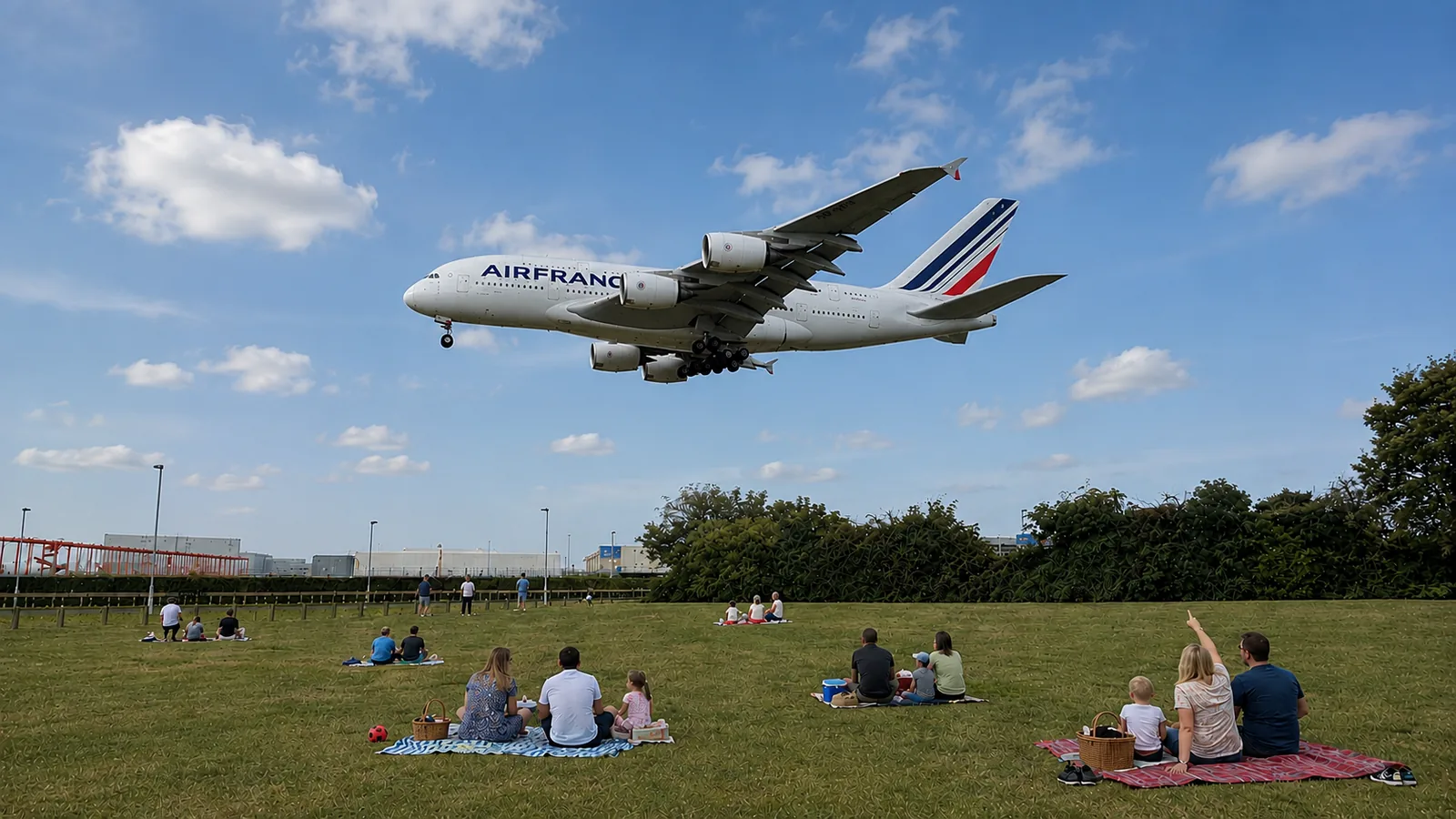
Probably the most famous plane spotting location in the country. From the grassy field at the end of Myrtle Avenue in Hatton, aircraft pass low overhead on short final to the southern runway whenever Heathrow is landing to the west (runway 27L) — head-on, right under the approach, and unbeatable for photography. It's about a 15-minute walk from Hatton Cross, or a short drive. On a sunny weekend you'll be among plenty of other spotters. The honest caveat: there are no facilities at all — no toilets, no cafe, no shelter — and it's a residential street, so park with real consideration for the people who live there, and bring everything you need with you.
Heathrow Academy viewing stand (Newall Road, TW6 2RQ) — closed
Best for: reference only — no longer accessible
For years, the Heathrow Academy on Newall Road (TW6 2RQ) was the airport's official public viewing point — a free covered stand overlooking the northern runway. It's worth knowing about because Heathrow's own spectator-areas page still lists it, and you'll see it recommended in plenty of older guides. In reality the physical stand has been closed and fenced off for several years, with no confirmed reopening or replacement. So don't plan a trip around it — use the informal spots on this page instead. If you want to be certain of the latest position, check the Heathrow Academy's own website or social channels before relying on it. Getting this right, when the official listing doesn't, is exactly why it's worth covering here.
Hatton Cross
Best for: spotting without a car
Hatton Cross has its own London Underground station on the Piccadilly line, right by the eastern end of the southern runway — which makes it the best option at Heathrow if you don't drive. From the vantage points a short walk away you get side-on views of aircraft on the southern runway and taxiing to and from the terminals, plus cafes and shops close by for a break. It's a great choice for beginners and for a first visit: easy to reach, easy to leave, and busy enough that there's always something moving. The trade-off versus Myrtle Avenue is the angle — you're more side-on than directly under the approach.
Southern Perimeter Road (A30 corridor)
Best for: takeoff and rotation photography
The A30 Southern Perimeter Road runs along the south side of the airport and gives side-on views of departures rotating off both runways — the classic angle for catching an aircraft as its nose lifts and the gear starts to retract. You'll need a car, and there are only informal lay-bys to stop at, with no facilities, so it suits a focused photography session rather than a family day out. Be sensible about where you pull in and don't obstruct traffic or accesses. Light is generally best with the sun behind you, which on this side favours certain times of day depending on the season.
Cranford
Best for: experienced spotters during easterly operations
Cranford sits at the north-eastern side of the airport and only comes into its own during easterly operations — which happen roughly 30% of the time, mostly when the wind swings round from the east. When it's active you get spectacularly low passes over this side of the field; when it isn't, you may see very little, so this is a spot for experienced spotters who check the conditions first. Before travelling, look at the wind direction or the live METAR for Heathrow (ICAO code EGLL) on a weather or tracking app to confirm the airport is working easterly. Parking is on residential streets only, with no facilities, so treat the area with respect.
King George VI Reservoir
Best for: landscape photography and birdwatchers
For something different, the area around the King George VI Reservoir to the west of the airport offers distant approach views with water in the foreground — a favourite with photographers after a more scenic, landscape-style shot, and with birdwatchers who combine the two hobbies. It's a moderate walk with limited parking nearby and no facilities, and access around the reservoir itself can be restricted, so check what's open to the public before you go. You'll want a longer lens here than at the close-in spots, as the aircraft are much further away than at Myrtle Avenue or Hatton Cross.
Which runway is Heathrow using? Westerly vs easterly
Heathrow has two parallel runways and alternates which is used for landings to share the noise between communities. The direction depends on the wind, and it decides where you should stand:
- Westerly operations (“27”) — the most common, around 70% of the time, thanks to the UK's prevailing south-westerly wind. Aircraft land from the east, passing low over spots like Myrtle Avenue.
- Easterly operations (“09”) — roughly 30% of the time, when the wind is from the east. Aircraft land from the west, and spots like Cranford come into their own.
On westerly days the two runways typically swap roles partway through the day — very roughly around 3pm, though it varies — to give residents a break from the noise, so the arrival runway can change during your visit. Before you set out, check the wind direction or a flight-tracking app so you pick a spot on the arrival side.
The ~70/30 westerly/easterly split and runway alternation are set out on Heathrow's own wind direction and operations pages.
The best time of day for plane spotting at Heathrow
Heathrow is busy from before dawn until late at night, but two windows stand out. Early morning brings the long-haul arrival bank — a steady stream of widebodies inbound from Asia, the Middle East and beyond, and the best time for variety. A second wave of transatlantic arrivals builds through the afternoon. Departures run throughout the day, so there's rarely a quiet moment.
What planes you'll see at Heathrow
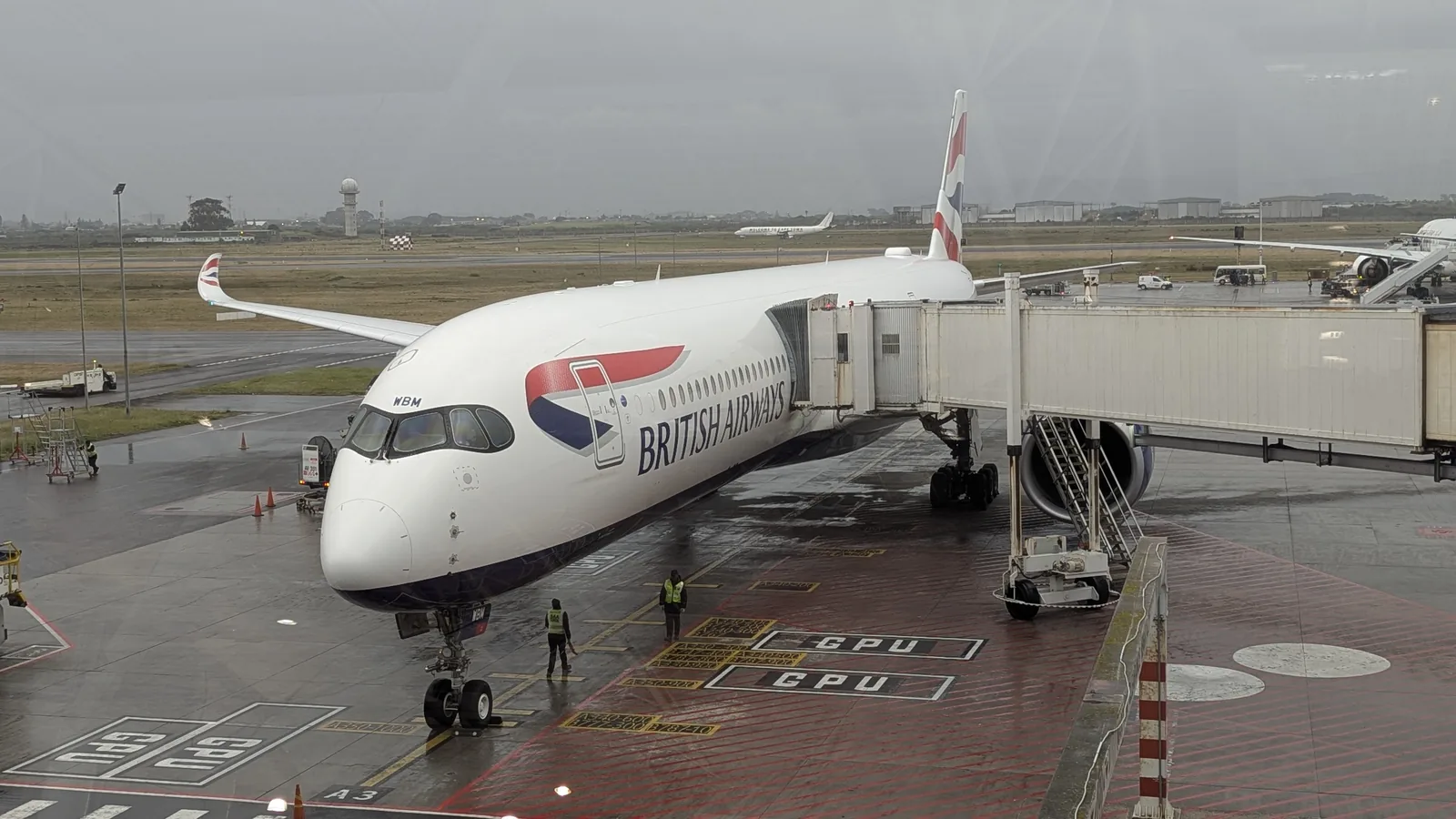
Heathrow is the main base for British Airways and Virgin Atlantic, and a hub for long-haul carriers from every continent — one of the best places in Europe to see modern widebodies. Expect the Airbus A380 (British Airways and international carriers such as Emirates), plus the Boeing 787, Boeing 777, Airbus A350 and Airbus A330, alongside a constant flow of short-haul narrowbodies. It's a superb airport for filling a logbook with airlines you won't see anywhere else in the UK.
Photography tips for Heathrow
- Shutter speed: 1/800s or faster freezes a jet sharply. For a propeller or turboprop, drop to around 1/200s to keep a little blur in the disc so it doesn't look stopped.
- Aperture: f/5.6–f/8 keeps the whole aircraft sharp. Use continuous autofocus (AI Servo / AF-C) and burst mode to track the approach and pick the best frame.
- Lens: at close-in spots like Myrtle Avenue and Hatton Cross a standard zoom is plenty; for the reservoir and other distant views you'll want a longer telephoto.
- Light: morning sun suits westerly arrivals; golden hour flatters everything; an overcast sky is actually good for clean livery detail without harsh shadows.
- Apps: pair a tracker like Flightradar24 with a weather/METAR app so you know the runway direction before you travel — see our plane spotting & flight-tracking apps guide. “27” means westerly operations (most common); “09” means easterly.
Printables for your Heathrow visit
Bring a printable logbook sheet to track every registration, type and airline you catch on the approach — instant PDF downloads to print at home.
Ready-made columns, a dedicated rare-catch page and kid-friendly challenges — more useful than a blank notebook, and you can reprint them forever.
Complete Spotter's Bundle
Every sheet, checklist and planner in one money-saving download.
£9.99 · instant PDF download → Best sellerAircraft Logbook Sheets
Record registration, type, airline, date and location for every aircraft you spot.
£4.99 · instant PDF download → For familiesKids' Spotting Fun Pack
Printable challenge cards, spotting bingo and a scoreboard to keep young spotters busy.
£3.99 · instant PDF download → For teensTeen Spotter's Logbook & Challenges
A proper logbook plus achievements, a type collection and season stats — built for teenage spotters.
£4.99 · instant PDF download →Secure checkout via Payhip · instant download · no account needed · prints on any home printer (A4 & US Letter included).
Log every catch at Heathrow
Take printable spotting sheets or the paperback log book to Myrtle Avenue — note the registration, type and airline of everything you see, and pair them with a flight tracker app to identify aircraft as they arrive.
Get your spotting sheets →Heathrow plane spotting FAQ
Where is the best place to watch planes land at Heathrow?
Myrtle Avenue in Hatton is the classic choice. When Heathrow is landing to the west (runway 27L, the most common set-up), aircraft pass low overhead on short final — the best close-up view for photography. Hatton Cross is the easiest spot to reach without a car.
Is there an official viewing area at Heathrow?
Not currently. The Heathrow Academy on Newall Road (TW6 2RQ) used to have an official free covered viewing stand, and Heathrow's spectator-areas page still lists it — but in reality the stand has been closed and fenced off for several years, with no confirmed reopening. The best options now are the informal public spots: Myrtle Avenue for low arrivals, Hatton Cross for public-transport access, and the Southern Perimeter Road for departures.
Is plane spotting at Heathrow legal?
Yes. Watching and photographing aircraft from public land is legal in the UK, and Heathrow is used to spotters at the well-known locations. Stay on public land and rights of way, don't trespass or interfere with airport security or operations, park considerately, and follow any local signage.
What's the best time of day for plane spotting at Heathrow?
Early morning is best for variety, when the long-haul arrival bank brings widebodies in from Asia, the Middle East and beyond. A second wave of transatlantic arrivals builds through the afternoon, and departures run all day, so Heathrow is rarely quiet.
Can I go plane spotting at Heathrow with children?
Yes — it's a great family day out. Myrtle Avenue is a favourite with kids thanks to the spectacularly low aircraft, though there are no toilets or facilities there, so bring everything you need. Hatton Cross is an easier option with children, as it's on the Underground with cafes and shops nearby.
What planes can I see at Heathrow?
Heathrow is the main base for British Airways and Virgin Atlantic and a hub for long-haul carriers from every continent — one of the best places in Europe for modern widebodies. Expect the Airbus A380 (British Airways and carriers such as Emirates), plus Boeing 787s and 777s and Airbus A350s and A330s, alongside a constant flow of short-haul narrowbodies.
More UK airports: see the London & the South East spotting guide or browse the full UK airport spotting guide.